


If you own a business in Calgary and you’re not showing up when people search “near me,” something in your local SEO is broken. And it’s probably not just one thing.
Google decides who shows up in the Local Pack using a mix of signals: your Google Business Profile, your reviews, your website, your backlinks, and now, increasingly, how well AI tools like ChatGPT and Google’s AI Overviews understand your business. Understanding the local seo ranking factors that actually move the needle in 2026 is the difference between getting found and getting skipped.
This guide breaks down exactly what Google looks at, how much each factor matters, and what you can do about it today. No fluff, no guesswork, just what actually works.
What Are Local SEO Ranking Factors, Really?
Local SEO ranking factors are the signals Google uses to decide which businesses show up in the Map Pack, Google Maps, and local organic results when someone searches for a product or service near them.
Think of it like a scorecard. Google checks your Google Business Profile, counts your reviews, checks how consistent your business information is across the web, looks at who links to your site, and watches how people interact with your listing. Add all that up, and you get your local ranking.
Here’s the quick breakdown before we go deeper:
|
Signal Group |
Approximate Weight |
|
Google Business Profile (GBP) Signals |
32% |
|
On-Page Signals |
19% |
|
Review Signals |
16% |
|
Link Signals |
15% |
|
Behavioral Signals |
8% |
|
Citation Signals |
7% |
|
Social Signals |
Emerging |
These numbers shift slightly year to year, but the order rarely surprises anyone who’s actually been doing this work.
How Google Actually Decides Who Ranks Locally
Before we get into the individual factors, you need to understand the three pillars Google uses to filter every local business. Everything else builds on top of these.
Relevance
Relevance is about how well your business matches what the searcher typed. If someone searches “emergency plumber,” Google wants to show plumbers who actually offer emergency services, not just anyone with “plumbing” in their category. Your primary category, business description, and the services you list all feed into this.
Distance
Distance is exactly what it sounds like: how close your business is to the person searching. For “near me” searches, this matters a lot. But distance alone won’t win you the top spot if a business two blocks further away has a stronger profile.
Prominence
Prominence is your reputation. This comes from your review count, your backlinks, how well-known your brand is, and whether Google’s systems recognize your business as a trusted entity. According to Google’s own Business Profile guidelines, prominence also reflects how a business is known offline, through press mentions, awards, and general reputation, not just what’s happening on your listing.
Now let’s get into the factors themselves.
The 8 Local SEO Ranking Factors That Actually Matter in 2026
1. Google Business Profile Signals (32%)
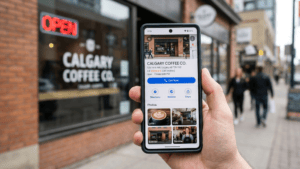
Your Google Business Profile is still, by far, the single biggest factor in local rankings. It’s free, it’s the first thing Google checks, and most businesses still don’t fill it out properly.
What matters most inside your GBP:
- Primary category — this is the strongest relevance signal you control
- Business description — write it naturally, include your services and area, don’t stuff keywords
- Photos — profiles with regular, real photos outperform ones with none
- Posts — weekly updates signal an active, trustworthy business
- Services and products list — helps Google match you to specific searches
- Q&A section — seed it with real questions your customers actually ask
A lot of business owners set this up once and never touch it again. That’s a mistake. Google treats an active profile very differently from a stale one. If you want a step-by-step walkthrough, we put together a full Google Business Profile optimization guide that covers every field worth optimizing.
2. On-Page SEO Signals (19%)
Your website still matters a lot. Google reads your pages to confirm what your Business Profile is telling it. If your GBP says you’re a Calgary roofing company but your website never mentions Calgary or roofing services clearly, that’s a mismatch Google notices.
Key on-page factors:
- Title tags and headers with your service and location
- NAP (name, address, phone number) visible on your site, not just in the footer
- LocalBusiness schema markup that matches your GBP exactly
- Fast load times and a clean mobile experience
- Dedicated location or service pages instead of one thin homepage trying to cover everything
If your site was built years ago and hasn’t been touched since, it’s probably costing you rankings. This is where a properly structured website design makes a real difference, not just visually, but in how clearly it communicates relevance to Google.
3. Review Signals (16%)
Reviews aren’t just a trust signal for customers, they’re a ranking signal for Google. Quantity matters, but so does velocity (how often you’re getting new reviews) and recency.
A business with 200 reviews from three years ago and nothing since will often lose to a competitor steadily adding 5 to 10 fresh reviews a month. Google reads that as an active, trusted business.
A few practical tips:
- Ask happy customers right after a positive interaction, not weeks later
- Respond to every review, good or bad
- Never buy reviews or offer incentives, Google’s detection for this has gotten aggressive
- Spread reviews across platforms where it makes sense, not just Google.


4. Link Signals (15%)
Backlinks from relevant, local, and authoritative sites still carry real weight. A single link from a local news site or your city’s chamber of commerce can outweigh dozens of generic directory listings.
What actually works for local link building:
- Sponsoring local events or teams (often earns a natural link)
- Getting featured in local news for something genuinely newsworthy
- Guest content on relevant local or industry sites
- Community organization partnerships
If this feels like a lot to manage on top of running your business, it’s usually worth bringing in help. Our SEO services in Calgary include local link building as part of the broader strategy, so you’re not trying to figure this out alone.
5. Behavioral Signals (8%)
Google watches how people interact with your listing. Click-through rate, calls, direction requests, and how long someone stays on your website after clicking through, all of this feeds back into your ranking.
This is part of why photos and a strong business description matter so much. A compelling listing gets more clicks, and more clicks (paired with real engagement) tells Google your business is what people are actually looking for.
6. Citation Signals (7%)
Citations are mentions of your business name, address, and phone number across the web, usually on directories. The weight here is smaller than it used to be, but inconsistency still causes real damage.
If your phone number is listed differently across five directories, Google sees conflicting data and trusts your listing less. This is one of those unglamorous fixes that quietly helps everything else work better.
7. AI Visibility Signals (New for 2026)
This is the factor most local SEO guides still aren’t talking about, and it’s growing fast. Tools like ChatGPT, Perplexity, and Google’s AI Overviews are increasingly answering “best [service] near me” questions directly, sometimes before a searcher even sees the Map Pack.
For your business to get named in these AI-generated answers, it needs to exist consistently and clearly across multiple sources: your GBP, your website, review platforms, and any structured data on your site. If your information conflicts across these surfaces, AI tools tend to skip you rather than guess.
There’s also a review threshold worth knowing about. Businesses with fewer than roughly 150 reviews tend to get skipped over entirely by AI tools when they’re generating recommendation lists, even if that business ranks fine in the traditional Map Pack. It’s a good reminder that review signals and AI visibility aren’t separate strategies, they overlap more than most business owners realize.
This is part of a broader shift in how digital marketing services need to work now. It’s no longer just about ranking on Google, it’s about being findable everywhere search happens, including the AI tools more and more customers are turning to before they even open Google Maps.
8. Social Signals
Social signals are still the smallest piece of the puzzle, but they’re not nothing. Consistent engagement, mentions in local Facebook groups, and even Reddit discussions are increasingly being picked up as informal trust signals. Don’t build your whole strategy around this, but don’t ignore it either.
Common Local SEO Mistakes That Quietly Hurt Rankings
Even businesses doing “most things right” often trip on the same handful of issues:
- Inconsistent NAP data across directories, causing Google to distrust your listing
- Duplicate or thin location pages with swapped city names and little else
- Ignoring negative reviews instead of responding professionally
- Keyword-stuffing the business name on GBP, which now risks suspension
- Letting the GBP go stale with no posts, no new photos, no updates
- Missing schema markup, or schema that doesn’t match GBP data exactly
We’ve seen these mistakes play out across different industries. In one case, a client in the flooring space was doing everything “by the book” on their website but losing local visibility because their citations were a mess. Once cleaned up, their rankings recovered within weeks. You can see how this looked in practice in our breakdown of local SEO for flooring companies.
How Local SEO Is Changing Heading Into the Rest of 2026
A few shifts are worth paying attention to:
- AI Overviews are eating clicks. More searches get answered without a click at all, so being cited as the source matters as much as ranking.
- Entity consistency is becoming non-negotiable. Google and AI tools cross-check your business across surfaces before trusting you.
- Core Web Vitals are creeping into local rankings. A slow, clunky mobile site quietly drags down an otherwise strong profile.
- Reviews need volume and pace. A big one-time push isn’t enough anymore, steady, ongoing reviews perform better long term.
None of this replaces the fundamentals. It just means the fundamentals now need to be done more consistently and across more places than before.
Local SEO Ranking Factors for Calgary Businesses
Calgary’s local search landscape has its own quirks. Competition varies wildly by neighborhood, service area radius matters more here than in denser cities, and seasonal search behavior (think snow removal, HVAC, roofing after hailstorms) can shift rankings fast.
If you’re running a service-based business here, the service area setup in your GBP needs to reflect where you actually work, not just your office address. And because Calgary has a mix of established chains and small local operators, prominence signals like reviews and local press mentions carry outsized weight compared to bigger, less competitive markets.
We go deeper into what’s specific to this market in our full local SEO guide for Calgary small businesses, which pairs well with everything covered here.
How to Track Whether Your Local SEO Is Actually Working
Optimizing these factors only matters if you can see the results. Too many businesses make changes and then never check whether anything has improved.
A few ways to keep score:
- Google Business Profile Insights shows how many people found you through search versus maps, and what actions they took (calls, direction requests, website visits)
- Google Search Console tells you which local keywords are actually driving impressions and clicks to your site
- Rank tracking tools let you monitor your Map Pack position for specific keywords in specific neighborhoods, which matters more in a spread-out city like Calgary than it might elsewhere
- Review velocity over time is worth tracking monthly, not just the total count, since Google weighs recent activity more heavily
Set a baseline before you start making changes, then check back every 4 to 6 weeks. Local SEO rarely moves overnight, but you should see gradual, steady movement if the right factors are being addressed.

Quick Local SEO Action Checklist
|
Task |
Priority |
Frequency |
|
Complete every GBP field |
High |
One-time, then review quarterly |
|
Post GBP updates |
High |
1–2x per week |
|
Add new photos |
Medium |
Monthly |
|
Request customer reviews |
High |
Ongoing |
|
Respond to all reviews |
High |
Within 48 hours |
|
Audit NAP consistency |
Medium |
Every 6 months |
|
Build local backlinks |
Medium |
Ongoing |
|
Check schema markup accuracy |
Low |
Every site update |
Final Thoughts
Local SEO ranking factors aren’t a mystery, they’re just a lot of small, consistent things done well over time. Your Google Business Profile carries the most weight, but it only works alongside a solid website, real reviews, clean citations, and a handful of quality local links.
The businesses winning the Map Pack in 2026 aren’t necessarily the biggest, they’re the most consistent. If your listing has been sitting untouched for months, or your website hasn’t kept up with what Google now expects, that’s usually where the real opportunity is.
Not sure where your business currently stands, or which of these factors need the most attention? Our team can walk through your current setup and show you exactly where you’re losing ground. Whether you need help choosing the right SEO agency to work with or you’re ready to start fixing things now, we’re happy to help you turn these rankings into actual leads for your business.